
.png)
How to Change the Seals in Your Hydraulic Cylinder
A leaking hydraulic cylinder does not always mean the entire cylinder needs to be replaced. If the rod, barrel, piston, and other major components remain in good condition, replacing the worn seals may restore reliable operation and extend the cylinder’s service life.
The process, though, is not identical for every cylinder. The correct disassembly sequence, seal arrangement, and reassembly method depend on the cylinder’s design. That is why seeing the repair performed can be much more useful than trying to follow written instructions alone.
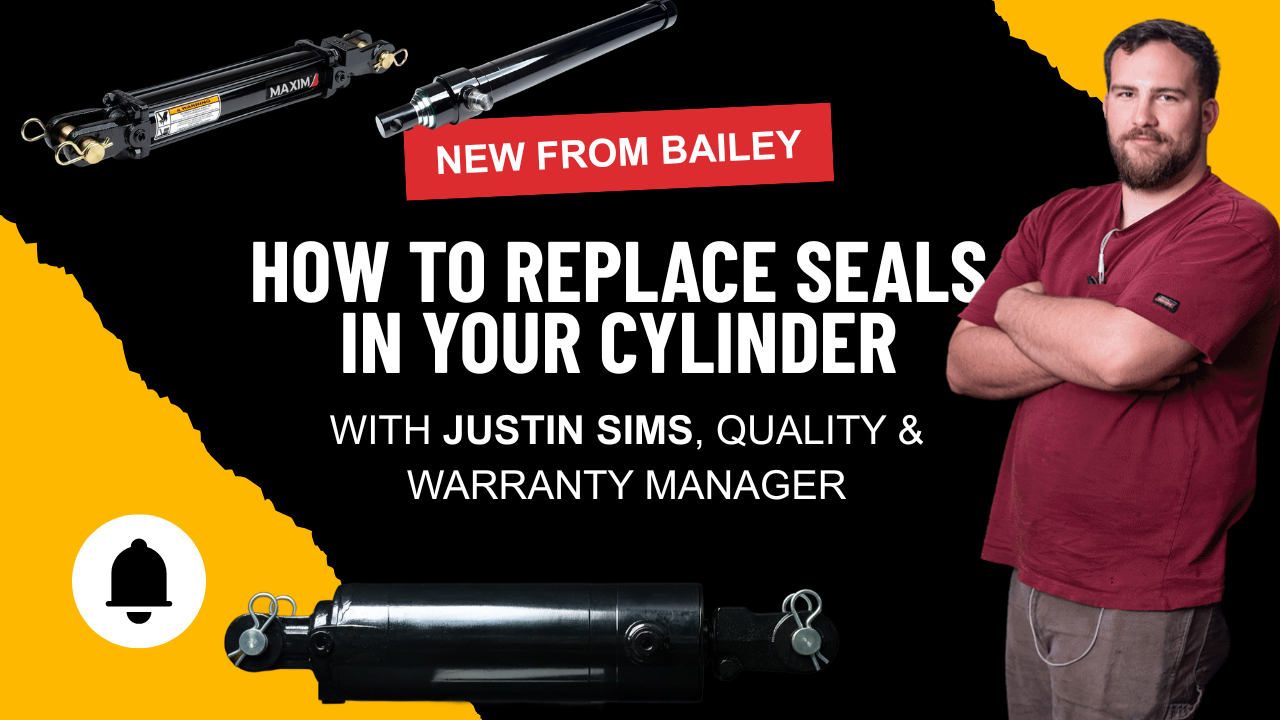
Bailey’s hydraulic cylinder seal replacement video series provides step-by-step demonstrations for several common cylinder styles, helping you see how each assembly comes apart and how the new seals should be installed.
When Should You Replace Hydraulic Cylinder Seals?
External leakage around the cylinder rod is the most obvious sign of seal wear, but other symptoms may include:
- Cylinder drift
- Weak or inconsistent movement
- Reduced ability to hold a load
- Jerky operation
- Recurring loss of hydraulic fluid
- Visible deterioration around the rod wiper
Make Sure the Cylinder Is Rebuildable
New seals cannot compensate for damaged metal surfaces.
Before completing the repair, inspect the cylinder rod, barrel, gland, and piston for:
- Deep scoring
- Pitting or corrosion
- A bent rod
- Damaged threads
- Excessive wear
- Cracked or distorted components
A damaged rod or bore can quickly destroy the replacement seals. Depending on the severity of the damage, the cylinder may require professional repair or complete replacement.
Start with the Correct Seal Kit
Two cylinders with similar dimensions may still use different seal profiles, materials, or internal arrangements. Whenever possible, use the cylinder’s complete model or part number to identify the correct replacement kit.
Before removing the old seals, take photographs of their locations and orientation. Many hydraulic seals are directional, meaning they must face a specific way to contain pressure properly. Installing one backward can cause the cylinder to leak or perform poorly immediately after the rebuild.
Remember, Bailey offers a broad selection of hydraulic cylinder seals and seal kits for common Chief, Maxim, and other cylinder designs.
What Does the Seal Replacement Process Involve?
Although the exact procedure varies, most cylinder re-sealing projects include the same general stages:
- Clean the cylinder before opening it.
- Remove the gland and rod assembly.
- Disassemble the piston, gland, and related components.
- Remove and document the old seals.
- Inspect the rod, bore, piston, and gland for damage.
- Install the new seals in the correct locations and orientation.
- Reassemble and reinstall the cylinder.
- Cycle and test the cylinder gradually.
Each of these steps contains details that are easier to understand visually. For a closer look at the process, watch Bailey’s complete How to Change Hydraulic Cylinder Seals video series.
Safety and Cleanliness Matter
Hydraulic systems may retain dangerous pressure after the equipment is shut down. Before disconnecting a cylinder, lower all attachments, isolate the power source, relieve trapped pressure, and follow the equipment manufacturer’s lockout/tagout procedures.
Never work beneath a load supported only by hydraulics, and never use your hand to search for a pressurized leak. Hydraulic fluid injected beneath the skin is a medical emergency.
Cleanliness is equally important. Dirt entering an open cylinder can damage new seals and other components as soon as the equipment returns to operation. Clean the outside of the cylinder before disassembly, cap open hoses and ports, and perform the rebuild in a clean work area.
Do Not Ignore Why the Seals Failed
Seals eventually wear, but premature failure usually has an underlying cause.
Common contributors include:
- Contaminated hydraulic fluid
- Excessive heat
- Pressure spikes
- Side loading or misalignment
- A damaged cylinder rod
- Incorrect seal installation
- Incompatible fluid or seal material
- Operation beyond the cylinder’s rated limits
Pay attention to the condition of the old seals during disassembly. Cuts, embedded particles, hardening, uneven wear, or extrusion damage can help identify what went wrong.
Watch the Complete Seal Replacement Process
Written instructions can explain the sequence, but they cannot always show the subtle details that make the difference between a reliable rebuild and a damaged new seal.
Visit Bailey’s hydraulic cylinder seal replacement playlist for practical, step-by-step demonstrations covering common cylinder designs.
Need help finding the right components for your repair? Browse Bailey’s hydraulic cylinder seals and seal kits or contact the Bailey team for assistance identifying the correct kit for your cylinder.


Shop
Hydraulics & Electronics
Bailey produces the highest quality hydraulic and electronic parts for diverse applications including manufacturing, automotive, construction, agriculture, forestry and OEM.


SKU: 325052


Build With Bailey
Custom hydraulic solutions designed to meet your unique needs. From expert engineering support to a wide range of components, we streamline your project from design to delivery.